
How do Rules and Expectations Support Learning?
As early childhood parents or educators, we know that children learn through exploration, social interaction, and play. Clearly communicated classroom expectations serve as reassuring boundaries within which children are free to explore. Without clear-cut rules, children can become anxious in an early care setting, unsure about where they are allowed to go and what is expected of them.
Setting expectations for behavior is a form of social development that directly affects all learning at home. If your goal is for your child to make good choices, whether they’re with you, then establishing expectations should be your top priority from the very first day of school. When you have well established rules and expectations you’ll have your children who are confident problem solvers working collaboratively with others.
Routines support and develop children’s social skills.
As babies grow, they come into contact with more people and begin to learn patterns and routines for social interaction. Greetings, good-byes, and chatting with others are examples of routine interactions that teach social skills. These interactions are also opportunities to help our children develop language skills.
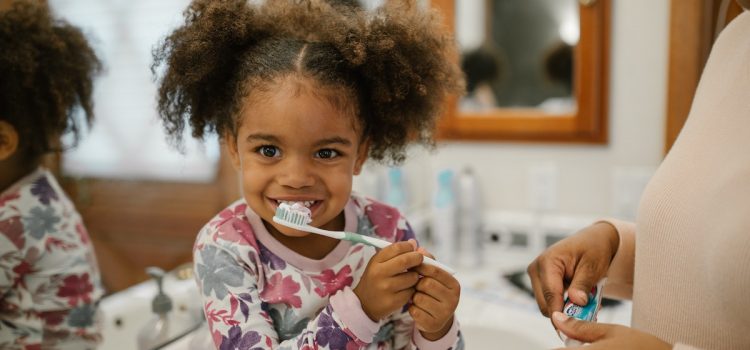
Play-time and mealtime are two routines that are very social times for children and parents alike. Through talking, taking turns, sharing toys, learning to wait, and helping others during these activities, young children learn important social skills that will help them later on in school.
Consider Children’s Ages and Developmental Stages
Because young children’s brains and cognitive skills develop rapidly, you’ll want to set rules and expectations that are appropriate for a child’s age. For example, throwing food on the floor during mealtimes is a developmentally appropriate behavior for infants, but is not typical for behavior expected from children in pre-k. Setting expectations that align with a child’s developmental progress sets children up for success, and minimizes frustration and power struggles.
Routines are an important opportunity for learning.
Daily routines are often thought of as just “maintenance” activities: meal time, running errands, getting ready for bed, taking baths. But these everyday actions are rich opportunities to support your child’s learning and development, while having fun. Routines offer the chance to build self-confidence, curiosity, social skills, self-control, communication skills, and more. Take grocery shopping:
Maintain Consistent Routines
Children are their best selves when there is consistency and predictability throughout their day. Keeping your classroom’s expectations consistent helps children feel secure, as they know where to be and what to expect as they follow daily classroom routines. Deviating from expectations can be confusing for children, making it more difficult for them to stick to the classroom rules.
Avoid Abstract Language
Because young children are able to understand concrete language before they can grasp abstract words and concepts, it is important to stick to clear, concrete language when setting expectations. Instructions using abstract phrases like “be respectful,” or “quiet down,” don’t clearly describe desired behavior, and can be difficult for young children to understand. Try to stick with words that children know and phrases that ask for specific actions and behaviors, such as “use your walking feet or “let’s use our quiet-as-a-mouse inside voices.” This way children understand what is being asked of them and can easily follow along.
Routines are satisfying for parents, too.
Not only do routines and rituals make transitions easier for children—they also help ease adults into parenthood. The early stages of becoming a parent can be overwhelming and sometimes put a strain on marriage. Continuing a ritual from your early marriage years (like an evening out or a special vacation spot) can help. In addition, taking a special ritual from your own childhood (such as a book that was read to you, a special breakfast made for you on Saturdays) can bridge your transition from a couple to a family.