
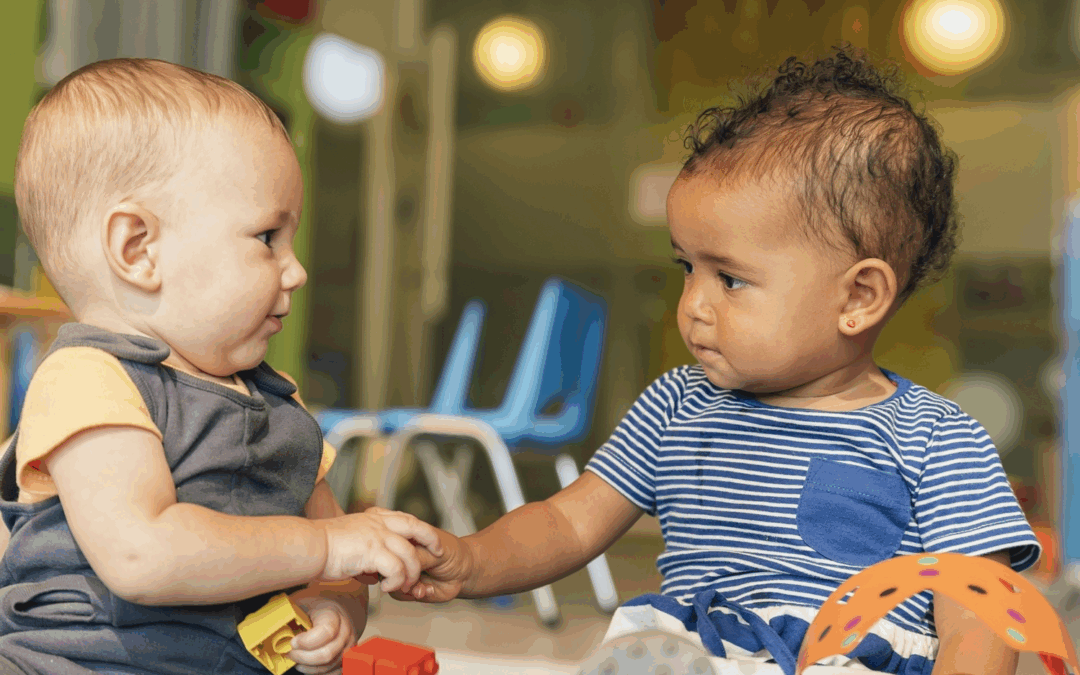
Birth – 11 Months
This precious stage marks the very beginning of your baby’s early years journey. It’s a time full of discovery, connection, and rapid growth. Your baby will begin to recognize familiar faces, respond to your voice, and explore the world through sight, sound, and touch.
The key areas to focus on are:
-
Personal, Social and Emotional Development
-
Physical Development
-
Communication and Language
At this stage, babies are building the foundations of communication. They observe facial expressions, listen to the rhythm of voices, and respond with coos, gurgles, and early babbling. They’ll reach out to touch, grasp, and hold objects, learning cause and effect through play.
Tip: Read short stories aloud, talk to your baby often, and sing nursery rhymes. These simple interactions help your baby develop listening skills and start recognizing words, tone, and emotion.
8 – 20 Months
During this stage of the early years, your baby becomes far more curious and mobile. You may notice them making sounds associated with objects, saying their first words, or following simple instructions. They might point to their nose or eyes when asked, or start using gestures to communicate what they want.
Motor skills also develop rapidly now – from crawling to walking and exploring the environment independently. Your child begins to make connections between language and the world around them, setting the stage for literacy, mathematics, understanding the world, and creativity.
Tip: Encourage exploration. Offer toys that stack, roll, or make sounds, and use real-life experiences (like pointing at a tree or bird) to teach new words.
16 – 26 Months
Confidence and communication grow hand in hand during this period of the early years. Your child will start engaging more with other children and adults, showing personality and preferences. You may hear them asking for favorite stories, naming everyday objects, or using short phrases to express needs.
This is also when nursery and home routines begin to work together. Sharing information with your child’s key worker about what they enjoy or are learning at home strengthens the connection between both environments. Collaboration ensures consistent progress and helps your child understand that learning happens everywhere.
Tip: Involve your child in daily routines – let them help pack a bag, hold a small shopping item, or name fruits and colors as you go. These moments develop confidence and understanding through play.
22 – 36 Months
Your toddler now thrives on routine, repetition, and familiarity. Establishing a predictable daily rhythm helps them feel secure and understand what to expect – whether it’s getting ready for nursery or enjoying story time before bed.
Their imagination is blossoming, and you’ll start to see early forms of pretend play, creativity, and emotional awareness. Reading different books allows them to see how characters feel and react, which builds empathy and emotional understanding.
Tip: Offer plenty of art materials like crayons and paper. Encourage drawing and mark-making – it’s an early form of writing and expression. They’ll begin to notice how hand movements translate into marks and shapes on paper.
30 – 50 Months
At this stage, your child’s confidence and curiosity truly shine. Their vocabulary expands quickly, and they begin to engage in longer conversations, imaginative storytelling, and more structured play. Fine motor skills are developing, allowing them to hold pencils, thread beads, or build complex block towers.
Encourage independence and problem-solving by involving your child in small tasks at home. Ask them to help set the table, fold small pieces of laundry, or count items together – turning everyday activities into fun learning experiences.
Tip: Use counting games and sorting activities during chores. For example, count each fork or plate as you lay the table – it strengthens number recognition while keeping them engaged.
40 – 60 Months
This final stage before school marks an exciting transition in your child’s early years. They are now ready for “big school,” equipped with confidence, curiosity, and essential early learning skills. You’ll see their ability to focus, cooperate with others, and express emotions mature significantly.
Their imagination, communication, and early literacy are now thriving. They can recall stories, follow instructions, and begin recognizing letters or sounds. They’ve also developed social awareness – understanding turn-taking, empathy, and teamwork.
Nursery plays a vital role in preparing children for this next step. Through structured learning, play-based activities, and caring support, we ensure each child leaves with a strong foundation for primary school and beyond.
Tip: Celebrate your child’s achievements and talk about the exciting step to school. Building positivity around learning helps them approach new challenges with confidence and enthusiasm.
Contact Us at Rising Stride
If you have any queries about monitoring the Early Years Development in our nursery, contact our staff and manager team at our nurseries or take a look on our website for more information.