
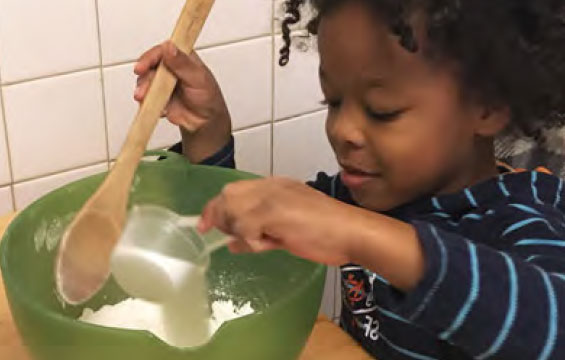
Squishing, rolling, sculpting, molding . . . young children love to play with playdough. Add some props from around the home and playdough play becomes a powerful way to support your child’s learning. This simple preschool staple lets children use their imaginations and strengthen the small muscles in their fingers—the same muscles they will one day use to hold a pencil and write. Using playdough with you, a friend, or siblings supports your child’s social skills such as sharing, taking turns, and enjoying being with other people. Playdough also encourages children’s language and literacy, science, and math skills—all at the same time!
What You Need to Make Playdough
- Measuring scales
- A large mixing bowl
- 8 tbsp plain flour
- 2 tbsp table salt
- 60ml warm water
- 1 tbsp vegetable oil
- Food coloring (optional)
Playdough Recipe
- Mix the flour and salt in the bowl, add the water, a few drops of food coloring and the oil. Mix and bring together.
- Dust a work surface with a bit of flour and turn out the dough. Knead together for a few minutes to form a smooth dough. If you want a more intense color, you can work in a few extra food coloring drops into the dough.
- Store in a plastic sandwich bag (squeeze out the air) and store it in the fridge to keep fresh.
Learning Areas
At our nursery, we believe that children learn best through hands-on, playful experiences. Making playdough is not just a fun sensory activity – it’s a rich learning opportunity that touches on multiple areas of development. Children strengthen their physical skills through kneading, mixing, pouring, and rolling the dough, improving hand-eye coordination and fine motor control. It also introduces early math’s concepts, such as measuring ingredients, understanding quantities, and comparing sizes and amounts.
Through conversation and exploration, children are exposed to new language as they describe textures, colors, and actions, expanding their vocabulary naturally. The sensory nature of playdough encourages children to explore textures and materials, promoting curiosity and creativity. Additionally, this activity supports art and design as children use the dough to mold shapes, patterns, and imaginative creations, learning about color mixing and visual expression along the way.
Most importantly, this simple home learning activity strengthens the bond between parent and child, helping parents engage in their child’s learning journey. It promotes independence, creativity, and problem-solving – essential foundations for early development – while making learning at home both fun and meaningful.
Contact Us at Rising Stride
Please speak to a member of our nursery team to enquire about your child attending nursery. For more information about our methods of teaching the Early Years Curriculum, visit our website for more info.