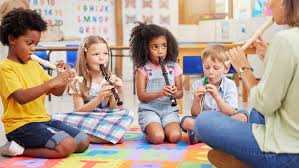
Music is often seen as a fun and engaging activity for children, but its benefits extend far beyond entertainment. Research has shown that musical training can significantly enhance language development and literacy skills in children. In this blog, we provide insights into how musical training can be a powerful tool for child development.
The Powerful Connection Between Music and Language
I often describe music to parents as a secret doorway into language learning. Unlike flashcards or drills, music naturally draws children in with rhythm, melody, and repetition – all of which strengthen the brain’s ability to remember sounds, patterns, and words. The music and language learning approach we use combines free-flowing play with structured activities so that children develop essential communication skills without even realizing they’re practicing.
When a song repeats a short, catchy phrase, children instinctively copy it, matching the sound and rhythm. Over time, they learn to anticipate what comes next in a rhyme or melody, which improves their ability to follow conversations and predict language patterns. This anticipation builds confidence, encourages participation, and helps cement vocabulary in long-term memory. The simple magic is that while they’re having fun, they’re also laying the groundwork for a lifetime of clear communication.
Why We Include Music in Daily Preschool Life
At Rising Stride, music isn’t something we only reserve for a set slot in the timetable – it’s woven into almost every part of our day. Whether it’s a cheerful welcome song each morning, a rhythmic tidy-up chant before lunch, or a soft lullaby before rest time, these little bursts of music provide structure, familiarity, and comfort for the children.
The benefits of this daily musical immersion are huge:
- Clearer pronunciation – Repeated singing helps children master tricky sounds.
- Vocabulary expansion – Songs introduce new words in context.
- Improved memory – Musical patterns make it easier to remember sequences and instructions.
- Better listening skills – Following a rhythm sharpens focus and attention.
While our structured Preschool program target specific skills, it’s the constant, everyday presence of music that helps those skills take root and flourish.
How Music Supports Early Speech Development
Speech development begins long before the first spoken word. Even babies respond to the musicality of voices – the rise and fall of pitch, the rhythm of speech – which is why parents instinctively use sing-song tones with infants. In our nursery, we harness this natural connection by designing music sessions that stimulate both listening and speaking abilities.
Some of our favorite strategies include:
- Call-and-response songs – Encourage repetition and articulation.
- Action rhymes – Pair words with movements to improve recall.
- Story songs – Use melodies to teach sequencing and sentence flow.
- Sound games – Match instrument sounds to words for phonemic awareness.
The Role of Parents in Music and Language Learning
I always tell parents that the benefits of music extend far beyond the nursery gates. Singing together at home, making simple instruments from household items, or even playing nursery rhymes on car journeys can reinforce the progress children make with us.
For instance, if your child learns a new rhyme in our sessions, singing it together in the evenings helps them retain new words and boosts their sense of achievement. We regularly share musical play ideas with families in our monthly updates so you can keep the learning alive and fun at home.
The Importance of Playful Learning
Children learn best when they’re having fun, and music brings learning to life like nothing else. Our music times are filled with musical play ideas designed to spark curiosity and creativity. This approach keeps children engaged and eager, while giving them the freedom to experiment with sounds, rhythms, and words without fear of “getting it wrong.” Over time, this kind of joyful exploration naturally develops toddler communication skills and confidence.
By incorporating music into a child’s learning journey, we can unlock a world of linguistic and literacy benefits that extend far beyond the classroom. Whether through formal music training or playful musical activities, the role of music in enhancing language and literacy skills in kids is undeniable and invaluable.
Contact us today to learn more about enrolment, arrange a tour, or speak with a member of our friendly staff about how we can support your child’s early speech development through music.