Consistent routines are great for kids. And that’s especially true for bodily care and self-care. These routines encompass various aspects of personal hygiene, including toilet training, dental care, and bathing. By fostering these practices early, children can attain the skills necessary to maintain their health and well-being as they grow.
Caring for young children includes supporting their hygiene habits and gradually transferring those routines to self-care habits. By modeling, planning time for bodily care, and providing appropriate supplies, children can take part in keeping their bodies healthy in the short-term and long-term.
Please note, the following suggestions and tips are intended to be integrated with and modified to honor your personal values, family practices, cultural practices, and guidance from your health care providers.
Toilet Time
Learning about bathroom basics, especially using the toilet, is a significant developmental milestone for young children. It empowers them with independence and confidence. Successfully learning to use the toilet not only encourages self-reliance but also lays the groundwork for understanding bodily cues and maintaining hygiene.
Tips for Parents:
- Consistency is Key: Establish a routine by taking your child to the toilet at regular intervals, such as after meals or before bedtime.
- Positive Reinforcement: Encourage children by naming their successes in developing awareness and responding to their bodily needs. Avoid pressuring children or using reward-based systems.
- Make it Fun: Utilize storybooks or songs about toilet learning to make the process engaging and less intimidating.
- Lead by Example: Demonstrate proper bathroom habits and encourage open discussions about the process.
Dental Care
Good oral hygiene habits should be instilled from a young age to prevent dental issues and promote overall health. Brushing teeth regularly and understanding the importance of oral care can set children up for a lifetime of healthy smiles.
- Choose the Right Tools: Select a fun, colorful toothbrush and a tasty, child-friendly toothpaste to make brushing appealing.
- Lead by Example: Brush your teeth alongside your child to model the behavior and show its importance.
- Set a Timer: Use a two-minute timer or play a song of similar length to ensure they brush for the recommended duration.
- Educational Games: Engage your child with educational videos or games that focus on dental health.
Bathing and Showering
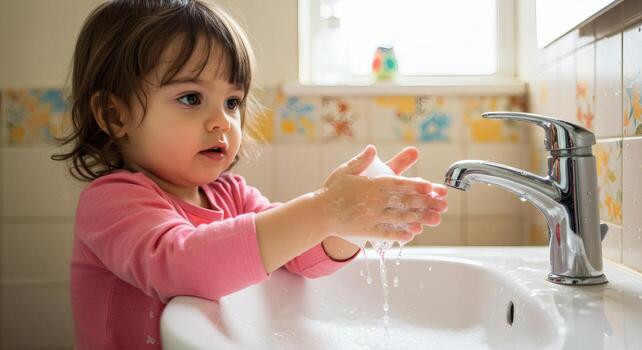
Bathing or showering is another essential routine that aids children in learning about cleanliness and caring for their bodies. Through supervision and gradually allowing children to participate in their bathing routines, parents encourage self-sufficiency while ensuring they remain clean and healthy.
- Bathing Routine: Establish a consistent bath time to help your child anticipate and prepare for the activity.
- Safety First: Ensure the water temperature is comfortable and supervise young children at all times.
- Make it Playful: Introduce fun bath toys and games to keep your child engaged and make bathing an enjoyable experience.
- Gradual Independence: Allow your child to participate in washing themselves, progressively increasing their level of involvement as they mature.
Establishing bodily care routines early can help ensure good habits are secured and long-lasting so that unhealthy habits don’t have to be unlearned or redirected in later years.
Supporting the Transition to Self-Care
Caring for young children includes supporting their hygiene habits and gradually transitioning these into self-care routines. Modeling proper techniques, planning time specifically for bodily care, and providing appropriate supplies can empower children to take responsibility for their health, both immediately and in the future.