
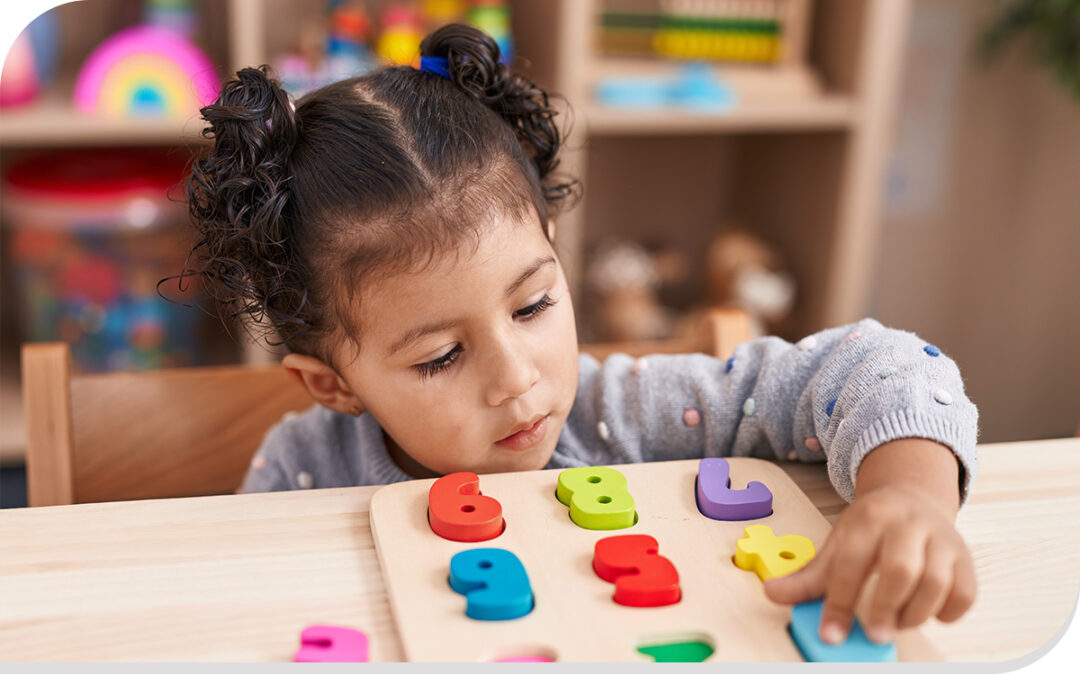
Effective learning in the early years is crucial for a child’s holistic development, setting the foundations for future academic success and lifelong learning. As effective educators we need to understand how a child learns so we can help them develop the characteristics they will need to reach their full potential.
Children are powerful learners from birth. They develop strong habits of mind and behaviors that will continue to support them to discover, think, create, solve problems and self-regulate their learning. The Characteristics of Effective Learning help us to understand these behaviors and focus on three key elements: engagement, motivation and thinking. When a practitioner makes observations on a child, they naturally look for what the child did, but they also need to take a step back and reflect on what characteristics underpin the child’s learning. Is the child engaged? Is the child playing and exploring? Is the child beginning to develop their own ideas? Is the child creating and thinking critically? Knowledge of the characteristics a child uses will ultimately lead to improved teaching and learning outcomes.
Engagement – Playing and Exploring Children want to play, learn and explore to find out more. At Rising Stride, we think carefully about providing engaging learning environments that suit the individual child’s interests and sensory play experiences that stimulate their curiosity, leading them to meaningful playing and exploring. We then role model how to play with the different activities without trying to direct the play.
Motivation – Active Learning focuses on the child’s motivation and drive to engage and persist in their learning. To achieve this characteristic, we provide exciting learning opportunities in an enabling environment by using open-ended and problem-solving resources that challenge and stimulate the children in our classes.
Thinking – Creating and Thinking Critically is about giving children time to experiment, think and ask questions. This occurs through supporting a child over a period of time, using and modelling language skills that will help them to articulate their thought processes and lead to a deeper and different understanding of their world.
Effective learning is a dynamic process that recognizes the unique needs and potential of each child. As educators, we play a pivotal role in nurturing the curiosity, creativity, and resilience of young learners, setting the stage for a lifetime of successful learning and development.
All children benefit from trying plenty of different activities. This gives them many ways to learn and many chances to practice what they’re learning. For example, it’s important for your child to have activities that are inside and outside, physically active or quiet, free or more structured, and so on.
Your child needs your support for learning. For example, your child might sometimes need you to show them what to do. But your child doesn’t need you to give them all the answers. Letting children make mistakes and find out for themselves how the world works is a big part of early learning.