
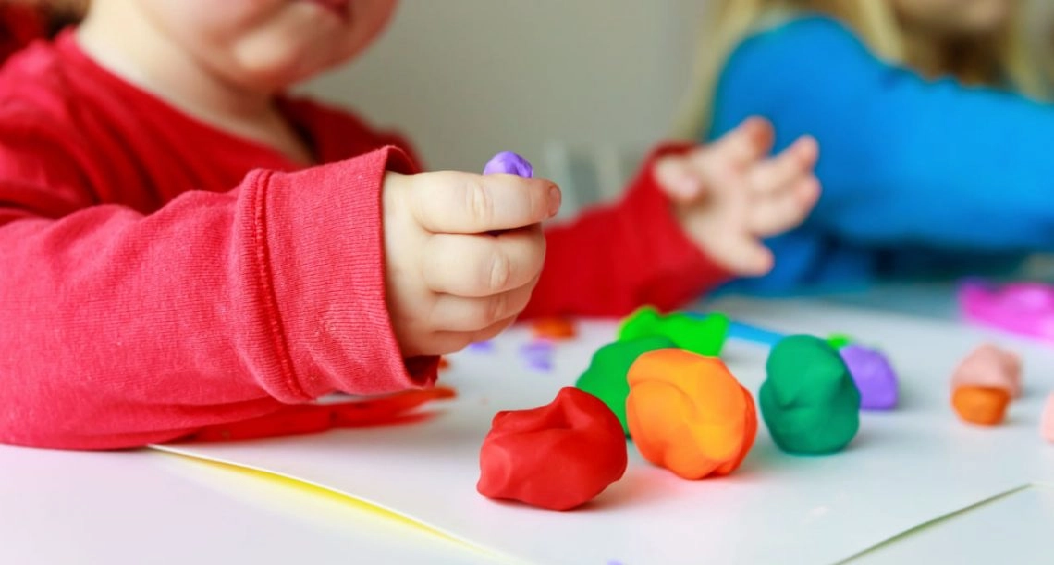
Beyond its colorful allure and squishy texture, this pliable compound serves as a multifaceted educational instrument, facilitating a broad spectrum of developmental milestones from cognitive growth to creative expression. Let’s navigate through unique ways Playdough can be employed to bolster early childhood education, ensuring every squish, roll, and mold contributes to your preschooler’s holistic development.
Building Blocks of Problem-Solving
Employ Playdough to introduce the foundational elements of problem-solving. Challenge your preschooler with tasks that require them to think critically, such as constructing a bridge that holds weight or replicating complex shapes and patterns. These activities encourage logical thinking and strategy formulation, essential skills in cognitive development and academic achievement.
Cultivating an Early Appreciation for Art
Use Playdough as a medium to kindle an early love for art and design. Encourage your child to explore color mixing, texture creation, and three-dimensional art construction. Introducing art principles through Playdough not only fosters a sense of aesthetic appreciation but also enhances their understanding of colors, shapes, and design, laying the groundwork for artistic expression and appreciation.
Gateway to Historical Exploration
Turn Playdough play into a time machine by recreating historical landmarks, dinosaurs, or scenes from different eras. This hands-on approach to history makes learning tangible and engaging, sparking interest in cultural and historical studies. It provides a unique opportunity to discuss history, architecture, and paleontology, making the past exciting and accessible.
Introduction to Basic Geometry
Shape Playdough into a fun, interactive way to explore basic geometry concepts. Forming spheres, cubes, cones, and cylinders helps children understand three-dimensional shapes in a concrete manner. Engaging in these playful geometric explorations lays a solid foundation for mathematical reasoning and spatial awareness.
Enhancing Sensory Development
Leveraging Playdough for sensory play stimulates the tactile senses, contributing significantly to sensory development. Mixing Playdough with different materials such as sand, glitter, or even small pebbles creates new textures that intrigue and engage, refining children’s sensory responses and enhancing their perceptual skills.
Playdoh as a Medium for Cultural Exploration
Incorporate Playdough into lessons about different cultures by crafting traditional symbols, foods, or clothing. This creative exploration serves as a springboard for discussions about diversity, traditions, and global customs, enriching preschoolers’ cultural understanding and empathy.
Encouraging Entrepreneurial Thinking
Inspire entrepreneurial skills by setting up a Playdough “business” where children can “sell” their creations. This simulation introduces basic concepts of economics, value, and exchange, encouraging children to think creatively about product creation, marketing, and sales, even at a basic level.
Through these inventive and educational applications of Playdough we’re not just providing our preschoolers with a tool for fun; we’re equipping them with a dynamic resource for learning and development. Playdough, in its essence, becomes a conduit for exploration, discovery, and the nurturing of an inquisitive mind, proving that within every can lies the potential to mold not just shapes, but futures filled with creativity, knowledge, and understanding.