
Why Playtime is important for preschoolers
There’s an age old saying that goes: “All work and no play makes Jack/Jill a dull boy/girl!”. While that might seem quaint, in some respects today, the trained staff at Rising Stride know the wisdom of that saying well. Playtime for preschoolers not only builds a child physically, but it also improves their cognitive and socio-emotional wellbeing. Without playtime embedded in a child’s learning and leisure schedule, young kids might not move down a path of healthy development of mind and body. Nor would they learn many of the skills needed later in life.
Importance of Playtime
Kids and playtime go hand in hand. So, it’s natural for anyone who sees a group of children playing, to think all that’s happening is kids having a good time. Not true! Playtime delivers more than just a “kids being kids” experience to youngsters indulging in play. And youngsters, engaged in fun-filled play at a Rising Stride, are having more than just fun.
In play, kids gain much more than letting off steam and burning pent-up energy. Some of the benefits that preschoolers get from play includes:
- Build fine and gross motor skills
- Develop healthy bones and muscles
- Gain confidence in their movements
- Get a boost in their self-esteem
- Through falling, stumbling, and hits and bumps, they develop resilience and toughness
- Playing freely gives them a sense of independence
As kids go through their playtime routines, they certainly hone their physical fitness. But they also begin to perfect their sense of balance, hand-eye coordination, develop agility and flexibility, and build stamina.
Beyond the Physical
But a lot of the above are physical reasons why playtime is important for young kids. They focus on getting kids out of their chairs and off couches, away from their desks, and running, jumping, and moving about – either individually, or as part of a team of players. But children attending formal learning and caregiving settings, like Rising Stride, also gain from emotional and cognitive benefits of playtime:
- Some types of play help them make critical decisions
- Group play forces them to interact with other kids and adults
- They learn social skills, like sharing toys, and waiting patiently for a turn at a swing or slide
- Many toys and games are new to youngsters, which inspires curiosity and sparks their senses of discovery
- Cooperation and coordination are hallmarks of some games, which preschoolers learn through play at a young age
- Play teaches children to explore their feelings by listening to other playmates, and responding to playtime cues
- Playing together with peers and adult caregivers helps children learn to express their own feelings too
- It builds on their verbal and non-verbal communication skills
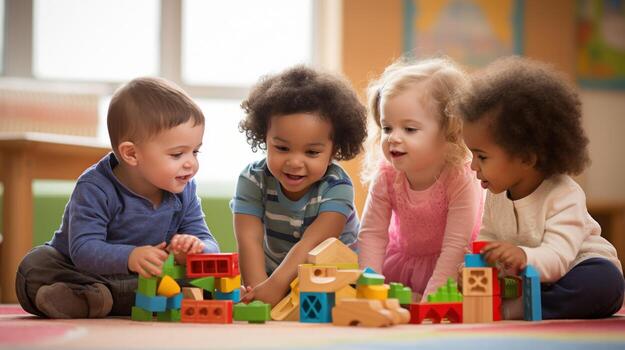
More importantly, playtime helps children understand the importance of dealing with challenges and difficult situations. If a child is unable to build a brick castle at their first attempt; or if the structure tumbles as they hoist the final piece, it makes them start from scratch. While that’s a lesson about dealing with a tough situation, it also helps them value persistence.
So, despite there being a lot of laughing, screaming, shouting and excitement during playtime at Rising Stride, it’s not just fun and games that takes place. Woven into every play activity, and embedded into every toy and game, is the objective to develop preschoolers in mind, body, character, and spirit.
Balancing Playtime
By now, parents, guardians, and other homecare givers will have grasped the importance playtime has in the lives of preschoolers. Clearly, because play offers so many benefits, it might be good to let youngsters indulge in play all the time – right? Not entirely correct! We’ve also heard another saying, that goes something like this: “Too much of a good thing isn’t a good thing!”. And the same holds true for playtime too.
A child’s playtime must be something they look forward to, and a part of their day that is “different” from the rest of their day. If all they did is play, then that may erode many of the previously highlighted benefits that playtime offers. For instance, because all they did was play games or play with toys, there’d be no sense of curiosity or discovery left to pursue. In fact, over indulgence in play might make play boring – an activity that kids could potentially shun.
Imagine what could happen to a child after weeks of unending play:
- They’d likely suffer from exhaustion, and display prolonged signs of fatigue and tiredness
- Playtime won’t excite or intrigue them any longer
- They’ll rather sit on a couch, or watch TV, than kick a soccer ball or play skip a rope outdoors
- It’ll breed lethargy and irritability in the child. They’ll feel mood swings and crankiness
- Lack of fresh air, sunshine, and exercise will make kids ill and weak
- Lack of physical movement might lead to obesity and other health conditions
One might argue that, since most preschoolers “learn through play”, they’re really playing all the time anyway. Not quite true. Neither too much, nor too little playtime is good for preschoolers. That’s why the administrators and staff at Rising Stride plan and balance playtime carefully.
Play activity is an integral part of the day care’s curriculum, and the center embeds some play into learning activities. However, there are also designated playtime segments in a child’s day, where all they do is have fun and enjoy themselves – free from paying attention to books, or learning to write the alphabet.