
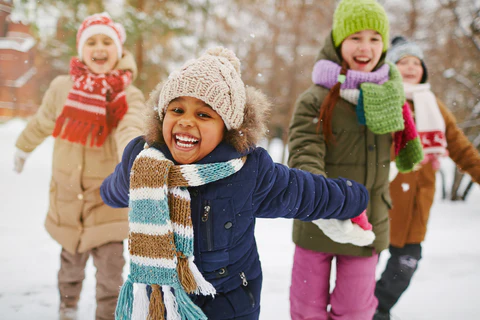
When the weather gets cold, many parents worry that playing outside will be bad for their children. As long as you take the right precautions, encouraging kids to participate in outdoor activities, either with other kids or as a family, can actually help them in many ways, from keeping them physically active to giving their imaginations a boost.
Benefits of Outdoor Winter Play
Just because the temperature has dropped doesn’t mean children have to stay inside all day. In fact, playing outside is extremely beneficial for children, especially in winter weather. Despite the misconception that cold weather makes children sick, fresh winter air is good for everyone. In the winter months, outdoor play:
1. Reduces Exposure to Germs Inside
Many parents worry about letting their children outside to play during the winter months because they’re fearful they’ll come back inside with a virus. While flu season falls during the prime winter months, cold temperatures alone don’t cause the flu. Instead, encouraging outdoor play in the winter can help reduce children’s exposure to germs and bacteria.
When the weather gets colder, people generally tend to spend more time indoors. With more and more people staying in, it’s easier for germs and bacteria to spread because everyone is breathing in the same air. Therefore, letting children outside to play can help limit their exposure to germs and bacteria inside.
2. Helps Build Immune System
Outdoor play limits contact with harmful bacteria and germs and may also help children build up their immune systems so that they won’t get sick as often. For example, plants in nature give off phytoncides, which are antimicrobial organic compounds that protect them from herbivores in the environment.
When children go outside, they directly breathe in the phytoncides that permeate the air. Studies have found that some of these phytoncides are antimicrobial when inhaled, while others increase immune system activity. Therefore, spending more time outside can help children build up their immunity to germs and allergens.
3. Increases Fresh Air Intake
Going outside during winter is a relieving escape from a stuffy home where bacteria could be hiding. It’s easier to spread sickness playing in one room, so go out and take a deep breath, exhale the cold winter air and reap the rewards.
4. Encourages Physical Exercise
It’s easy to feel restless when cooped up inside during the cold winter months. The best way to get energy out is by going outside to play. According to the U.S. Department of Health and Human Services, children ages six through 17 should get at least one hour of moderate-to-vigorous exercise each day.
However, less than one-quarter of children in this age range are actually participating in 60 minutes of exercise each day. Time spent outside is linked to higher levels of physical activity and can lower blood pressure and heart rate. Children must get outside to play, even in the colder months.
5. Increases Vitamin D Levels
Kids can get their daily dose of vitamin D when they go outside to play and soak up some sunshine. Even though they’re all bundled up, feeling the sun on their faces can still make a difference. Vitamin D has many benefits — it can help you fight off viruses and bacteria, keep your muscles moving properly and maintain strong bones, which is especially crucial in growing children.
Vitamin D deficiency is common during the winter and spring seasons since people are spending more time indoors. Therefore, it’s essential to go outside and get some sun exposure, as natural sunlight is a major source of vitamin D for children and adults.
Vitamin D is also believed to influence serotonin and affect your mood, and deficiencies have been linked to depression symptoms or even seasonal affective disorder (SAD). Commonly referred to as the “winter blues,” SAD brings feelings of sadness and loss of energy, most common during the winter solstice when the days are the shortest.
6. Refines Social Skills
Children who regularly get outside to play with other children boost their executive unction, which are skills kids need to help solve problems, negotiate, plan, prioritize and multitask. Playing outside helps children refine their social skills, as they’re working together, learning how to share and solving conflicts. They learn how to play together and how to treat other people through outside play, which is extremely valuable.
7. Stimulates Imagination
Playing outside can also help stimulate creativity and imagination, as kids work to entertain themselves as they play. Add snow to the mix, and kids have a different setting where they might find new ways to keep busy outside.
8. Offers a Change of Scenery
When the snow falls, that playground they saw every day in the summer now has a whole new look, having transformed into a winter wonderland rife with possibilities. Whether they use the snow as a new backdrop for playing house or a source of ammo for snowball fights, the winter weather can create countless opportunities.
Besides, the fresh air offers an invigorating change of scenery to escape cabin fever. Even moving simple indoor activities to the background can offer a new experience. Plus, that brisk air can feel refreshing.