

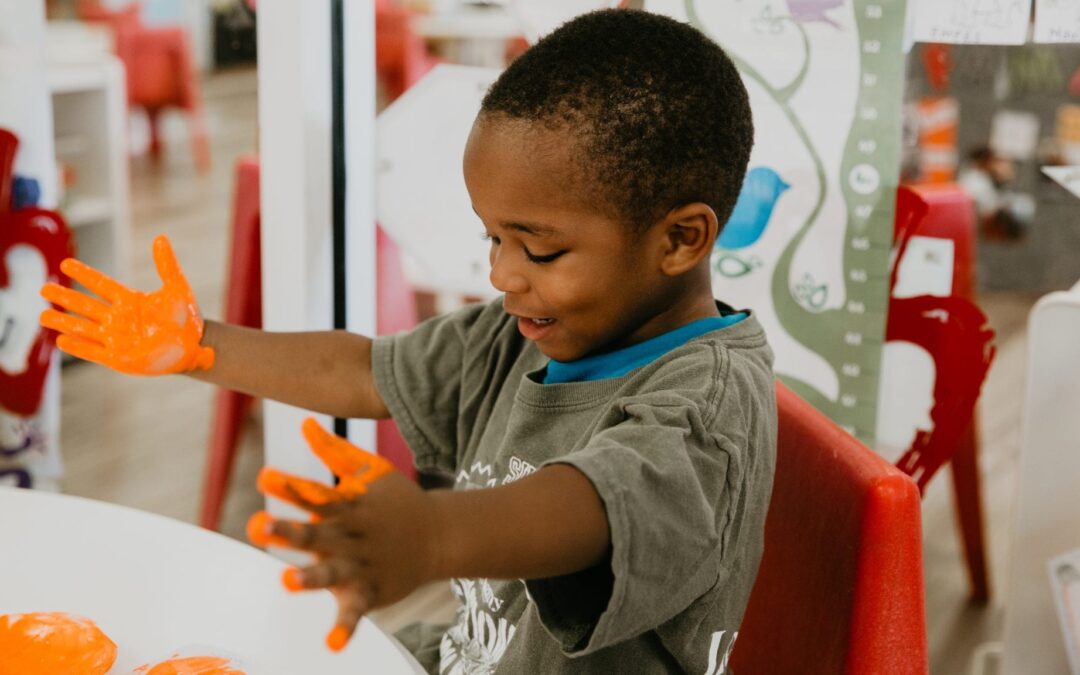
If you have ever watched your little one squish mud between their fingers, splash gleefully in a puddle, or bury their hands in a bowl of dry pasta, then you have already witnessed sensory play in action. It is one of those instinctive activities that children are naturally drawn to, and there is so much learning and development happening beneath the surface.
At Rising Stride, we believe that children learn best through play. We often hear people ask, “What exactly is sensory play, and why does it matter so much?” So we thought it was time to write it all down.
The simple answer
Sensory play is any activity that engages one or more of your child’s senses. This includes touch, sight, sound, smell, and taste, as well as two lesser-known senses that play a huge role in early development: the vestibular sense (balance and movement) and proprioception (body awareness and understanding where our limbs are in space).
When children explore the world through their senses, they are not just having fun (although they certainly are!). They are building neural pathways in their developing brains, laying the foundations for learning, thinking, and understanding that will support them for the rest of their lives.
Why is sensory play so important?
In the first few years of life, a child’s brain forms more than one million new neural connections every second. The experiences your child has, everything they touch, taste, smell, hear, and see, directly shape how those connections form.
Sensory play helps children to:
Make sense of the world around them
Everything is new to a young child. Sensory play gives them a safe, supported way to investigate textures, temperatures, weights, and consistencies. For example, during sand play, a toddler might discover that sand behaves differently when it is wet.
Develop their language skills
Sensory experiences give children rich, concrete things to talk about. We use descriptive language naturally when we explore: it is sticky, it is cold, it smells like lemons, it makes a crunching sound. This kind of vocabulary building is incredibly valuable, particularly for children who are still developing their confidence with words.
Build fine and gross motor skills
Pouring, scooping, pinching, rolling, and squeezing all involve small, precise movements that strengthen the muscles in little hands and fingers. These are the same muscles children will eventually use to hold a pencil and learn to write. Larger sensory experiences, such as jumping in leaves or rolling in grass, develop gross motor skills and overall coordination.
Regulate their emotions
This is one of the most profound benefits of sensory play, and one that many parents find genuinely transformative. Repetitive, tactile activities such as kneading playdough, running fingers through sand, or pouring water from one container to another can have a calming effect on the nervous system. Many children who struggle with big emotions find sensory play incredibly soothing. It gives them something to focus on and helps them feel grounded when the world feels overwhelming.
Develop creativity
Open-ended sensory play, where there is no “right” answer and no fixed outcome, is wonderful for nurturing creativity and independent thinking. When a child has a tray of oats, some spoons, and a few small figures, they will invent their own world.
What does sensory play actually look like?
One of the lovely things about sensory play is that it does not require expensive equipment or elaborate setups. It can be as simple or as detailed as you would like, and children tend to find joy in it regardless.
Here are some of the activities you might see at our nursery and that you can easily recreate at home:
- Messy play: Finger painting, playing with shaving foam, and exploring cooked spaghetti are firm favourites. Yes, they are wonderfully messy. Yes, they are absolutely worth it.
- Water play: Pouring, splashing, and experimenting with objects that float or sink. Water play is endlessly engaging and adapts beautifully to different ages and stages.
- Sand play: Digging, burying, building, sifting. Natural materials engage the senses in a uniquely rich way.
- Playdough: Squeezing, rolling, flattening, shaping. Homemade playdough is easy to make and can be customised with different colours and scents.
- Tuff trays: A container filled with a base material such as dried rice, oats, shredded paper, or autumn leaves, along with small objects, tools, and figures. These are wonderful for independent, self-directed play.
- Cooking and baking: Children can measure, mix, knead dough, and smell ingredients while developing practical life skills.
- Nature and outdoor play: Crunching through fallen leaves, feeling tree bark, smelling flowers, listening to birdsong, and running barefoot on grass. The outdoors is an incredibly rich sensory environment.
How You Can Support Sensory Play at Home
You do not need a dedicated playroom or a perfectly styled setup. Some of the best sensory experiences happen spontaneously: a muddy puddle on the way home from nursery, a bowl of warm water and washing-up liquid at the kitchen sink, or a handful of pasta shapes on a rainy afternoon.
Here are a few simple ideas to get you started:
- Keep a sensory bin in rotation. You can swap out the base material every week or so to keep it fresh and interesting.
- Let your child help with everyday tasks. Stirring, washing vegetables, kneading bread dough, and sweeping are great examples.
- Spend time outdoors in different weathers and seasons. Each brings its own sensory richness.
- Read books that invite sensory imagination. Scholastic has a fantastic list of the best sensory books for babies and toddlers.
- Follow your child’s interests. If they love water, lean into water play. If they love animals, create small world scenes in a sensory bin.
Our Approach at Rising Stride
Our rooms are set up with invitations to explore, discover, and create every single day. We plan our sensory activities thoughtfully, taking account of the seasons, the children’s current interests, and areas of development.
Most importantly, we follow the children. We see children as individuals with their own needs and interests, which enables us to tailor their learning experiences.
We’d love to show you around! Contact us to schedule a tour.