
When the sun is shining, most children naturally want to get outdoors, whether heading to the park, having a picnic, splashing at the beach, or simply running around in the garden. Sunshine lifts our spirits, encourages physical activity, and helps our bodies produce essential vitamin D.
But while there are many benefits to sunshine, it’s equally important to be aware of the risks that come with too much sun, especially for young children. At Rising Stride, your child’s health and safety are always our top priority. As we approach the warmer months, it’s the perfect time to revisit sun safety essentials and establish habits that will protect your little ones now and in the future.
Why Sun Safety Matters for Children
A Rising Stride can do wonders, but overexposure can be dangerous. The amount of sun exposure a person receives in the first 20 years of life plays a major role in their long-term skin health. Sun Safety: Information for Parents About Sunburn & Sunscreen – Simple rules to protect your family from sunburns
Babies and toddlers are particularly vulnerable. Their skin is not only thinner and more delicate, but also less equipped to repair the kind of cellular damage caused by UV rays.
Protecting Babies From the Sun
Babies under six months old should never be exposed to direct sunlight, and sunscreen should not be used on their skin at this age. Instead, aim to keep your baby completely shaded and well-covered when outside:
- Keep babies in dense, consistent shade.
- Dress them in lightweight, loose-fitting clothing that covers their arms and legs.
- Use a soft, wide-brimmed hat that won’t pose a choking hazard.
Because infants often put their hands in their mouths, sunscreen can easily be ingested, making physical protection like shade and clothing especially crucial. Once your child is older than six months, sunscreen can be safely introduced, but always in addition to shade and protective clothing, not instead of them.
You Can Burn Even When It’s Cloudy
A common misconception is that sunburn only happens abroad or during heatwaves. In fact, it’s UV radiation, not temperature, that causes sunburn, and UV rays can still be strong on overcast or breezy days.
The UV Index measures how strong the sun’s ultraviolet radiation is. A reading of 3 or higher means sun protection is recommended. So even if it doesn’t feel hot, or the skies are grey, your child’s skin can still be at risk.
Sun Safety Tips for Children
To keep children safe while enjoying the sunshine, it’s helpful to follow this five-point plan, recommended by health experts. These measures work best together, not in isolation; think of them as layers of protection, each adding another barrier between your child and harmful UV exposure.
1. Clothing
Clothing is the easiest and most effective way to block UV rays. Choose lightweight, breathable fabrics that cover as much skin as possible. Long-sleeved tops, longer shorts or trousers are ideal for outdoor play.
Look for tightly woven fabrics that don’t let light through. A quick test is to hold the garment up to the sun: if you can see light through it, UV rays can likely pass through too. For even greater protection, consider UPF-rated (Ultraviolet Protection Factor) clothing, which is specially designed to block UV rays and is particularly useful for beach or water-based activities.
For water play, long-sleeved swim shirts or rash vests offer excellent coverage while allowing freedom to move and splash.
2. Hat
A wide-brimmed hat provides crucial shade for the face, ears, eyes and neck, which are some of the most sensitive and frequently burned areas. Brims should be at least 6 cm wide to offer adequate coverage all around.
Avoid baseball caps or visors, which leave the ears and back of the neck exposed. For young children, choose hats with a chin strap or adjustable toggle to help them stay on during active play or windy days.
Make it part of the daily routine. Hats should go on before heading out, just like shoes or coats.
3. Shade
Between 10am and 4pm, UV levels are typically at their highest in the US. During these hours, it’s especially important to seek or create shady areas when playing outdoors.
Use trees, garden umbrellas, tents, pop-up shelters or prams with a sunshade to help keep little ones cool and protected. Shade is not a guarantee of complete protection, as UV rays can reflect off surfaces like water, sand, or concrete, so continue using other protective measures as well.
Try building the habit early: have snacks, books, and quiet playtime in the shade. Making shade a natural part of the day encourages children to value it themselves.
4. Sunglasses
Children’s eyes are still developing and are more susceptible to UV damage than adult eyes. Prolonged exposure can increase the risk of cataracts and other eye conditions later in life.
Choose sunglasses labelled 100% UVA and UVB protection (also known as UV400) The glasses should fit snugly, wrap around the eyes where possible, and feel comfortable so your child will actually wear them.
Allowing your child to help pick out their sunglasses – maybe in their favorite color – can increase the chances they’ll wear them willingly.
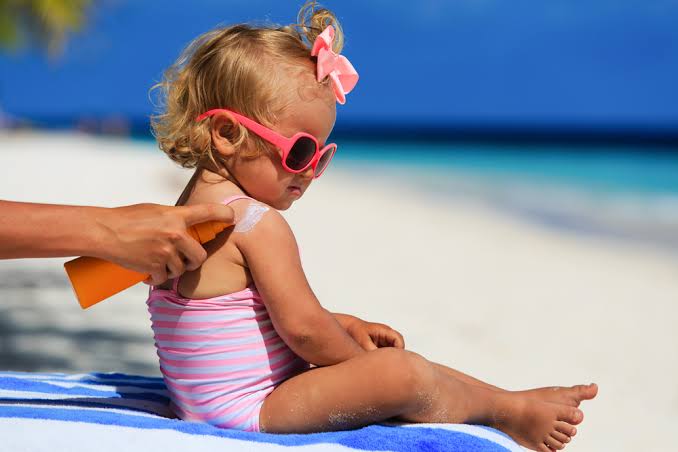
5. Sunscreen
Sunscreen should always be used in addition to the above measures, not as a replacement.
- Choose a broad-spectrum sunscreen with SPF 30 or higher and 4-star UVA protection (check for the UVA logo in a circle for EU standard products).
- Apply 20 minutes before going outside, so it has time to absorb and become effective.
- Reapply at least every two hours, and immediately after swimming, sweating or towel drying – even if the sunscreen says it’s water-resistant.
How much to use? Around seven teaspoons for a child’s body:
- One per arm and leg (4 total)
- One for the front of the torso
- One for the back
- One for the face, neck, and ears
Tinted children’s sunscreens are helpful for spotting missed patches – great for fidgety toddlers on the move!
Storage tip: Keep sunscreen in a cool, shaded place, and avoid leaving it in hot cars or direct sunlight. Excess heat can cause the active ingredients to degrade and reduce their effectiveness.
How to Make Sun Safety Fun
Children might not always enjoy having sunscreen applied, but turning it into a playful routine can help. Try using a familiar song like “Head, Shoulders, Knees and Toes” while applying cream, or invent a fun “sun cream dance” to make the process more enjoyable.
Letting your child help apply sunscreen (under supervision) is a great way to build independence and awareness. Reinforce the idea that sun cream is just as important as putting on shoes or brushing teeth before leaving the house.
Be a Role Model
Children learn by example. If they see you applying sunscreen and wearing a hat or sunglasses, they’re more likely to follow suit. Talk openly about why sun safety matters, and make it part of your family’s everyday summer habits.
Check Sunscreen Shelf Life
Like all products, sunscreen has a shelf life. Over time, especially after opening, the ingredients that provide protection can begin to break down.
- Look for the expiration date printed on the packaging.
- Check the small open jar symbol (often marked “12M” or “24M”) to see how long the product is effective after opening. (most sunscreens are 2 to 3 years from the manufacturing date, or 6 to 12 months after opening
It’s worth reviewing your sun care kit at the start of each season to make sure everything is still safe and effective.