
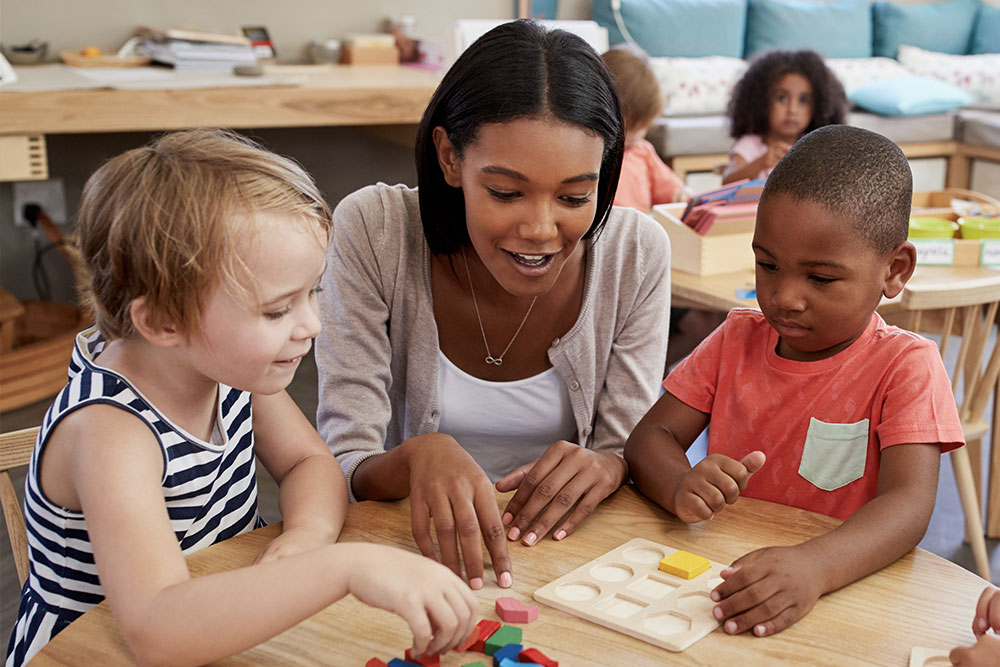
Research shows that playful learning helps toddlers become better thinkers and problem solvers. Kids who spend more time playing were more engaged, better at managing emotions, and showed stronger thinking skills. So the next time your child asks you to be the customer at their pretend restaurant or wants to mix “potions” in the bathtub, say yes. These little games are doing big things for their brain.
What are Cognitive Skills?
Think of these as “brain muscles.” They include memory, paying attention, and problem-solving. When a child follows a recipe or figures out how to build a tall tower of blocks without it falling, they are exercising their brain and securing concepts they will apply to future learning and navigating the world.
Playtime Is Learning Time
Your toddler is learning every time they play. When they build a block tower, they’re learning about balance and cause and effect. When they play dress-up, they’re building language and creativity. Even something as simple as sorting socks by color or dancing to music helps grow thinking skills. In a long-term study, toddlers in high-quality play-based programs showed stronger math and language skills later in school. That’s the power of play.
The best part is that play doesn’t need to be fancy or expensive. A cardboard box, some pots and pans, or homemade sock puppets can keep little brains busy for hours. You don’t always need a schedule or a plan. Just follow your child’s lead and let curiosity guide the way. Sit down with them, ask questions, and jump into their world. Your support helps them grow more confident and creative.
Toys and Activities That Boost Brain Power
The right toys can really help spark learning, but you don’t need a room chock-full of them. Simple things like puzzles, building blocks, shape sorters, and pretend play sets can all support brain development. These toys get your child thinking, talking, and figuring things out. They’re also great for language development and fine motor skills.
For toddlers who love to move, add toys that get them crawling, jumping, and climbing. Play tunnels, balls, and ride-on toys help build coordination and thinking skills at the same time. You can also get creative with sensory play. Fill a bin with rice, water, or sand and let your toddler scoop, pour, and dig. These kinds of activities are great for focus and self-control, and they’re really fun too.
If your little one loves building things or is constantly asking “why,” it’s a great time to introduce simple STEM activities that spark curiosity. Try stacking different household items like plastic cups, pillows, or boxes to see which ones balance and which ones topple—then talk about why. Mix food coloring into cups of water and let your child explore how colors blend. Sort buttons, blocks, or cereal by shape, size, or color to build early math skills. These hands-on activities encourage problem-solving, observation, and creativity, all while helping toddlers make sense of how the world works in a fun and playful way.
Why Play Makes a Big Difference
Play isn’t just for giggles, although those are always welcome. It helps toddlers build all kinds of important skills like language, math, and emotional growth. And when grown-ups join in by asking questions, adding new ideas, or simply playing along, kids learn even more. This kind of support, known as guided play, can be more helpful than playtime alone.
So when your toddler wants to build a blanket fort or hold a concert for their toys in the living room, jump in and enjoy the moment. Ask or help them design the tallest pillow tower ever. These silly, sweet moments are building big brains and strong foundations for learning. And you’re making memories together while doing it.
5 Tips to Try at Home
- Time Talk: Use a timer for brushing teeth or cleaning up. Ask, “How long do you think it will take?” It helps kids understand the concept of time.
- Kitchen Chemist: Let them help you cook! Measuring 1/2 cup of water versus 1 full cup is a great way to see fractions in action.
- Nature Scavenger Hunt: While walking, look for shapes. A stop sign is an octagon; a window is a rectangle. This builds “spatial awareness.”
- Foster Curiosity: Create an environment where your child feels safe to express their questions and ideas. Validating their curiosity supports wondering, experimenting, and making new connections.
- Model Learning: Verbalize when you are looking something up on your phone or the internet. Let your children see you read or engage in a wondering conversation with another adult. When children see adults exploring and asking questions about the world around them, they learn to do the same.
Play is the Heart of Learning at Rising Stride
At Rising Stride, we believe that play is the key to deep and curiosity-driven learning. Our preschool classrooms are full of fun, discovery, and hands-on adventures that help toddlers grow their brains and build important life skills. Whether we’re exploring nature, designing with blocks, or asking curious questions, every moment is packed with opportunities to learn through play.