
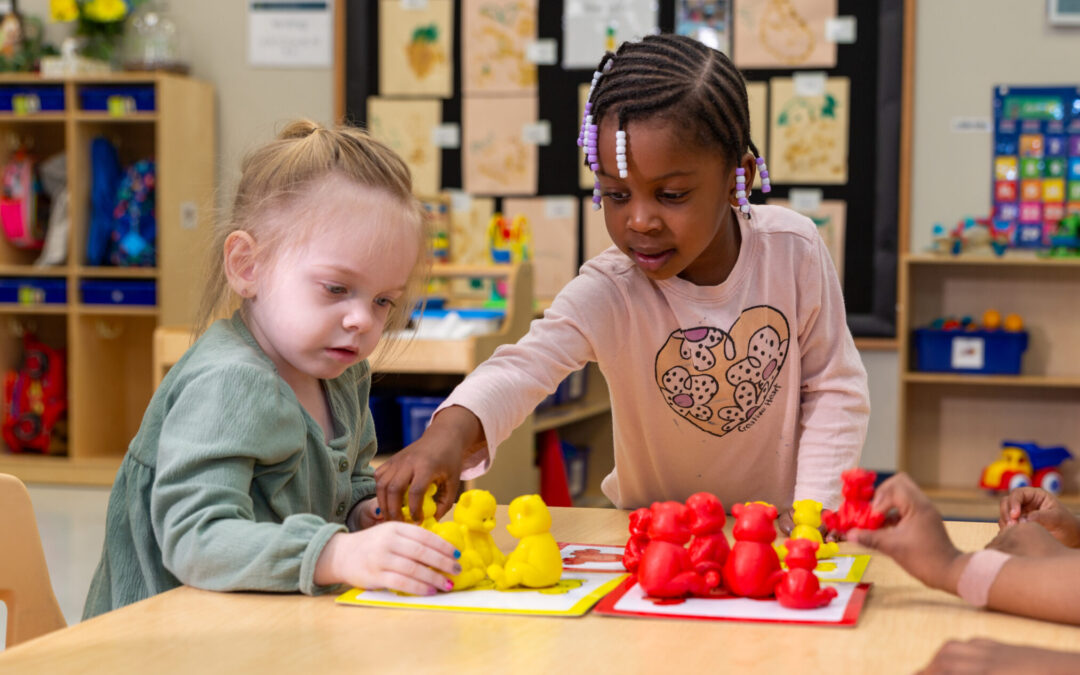
When you think of leadership, you might picture boardrooms, podiums, or presidents. But the truth is, leadership begins much earlier, in the choices a toddler makes about what to wear, in the persistence of a preschooler building a block tower, and in the empathy a young child shows when a classmate needs help.
At Rising Stride, we believe leadership is not reserved for a select few; it’s a skill that can be nurtured in every child from their earliest years. This month, we’re focusing on leadership as our character development trait, and we want to partner with you to help your child develop the confidence, voice, and responsibility that will serve them throughout their lives.
What Does Leadership Mean for Young Children?
Leadership isn’t about being the loudest voice or always being in charge. For young children, leadership is the ability to inspire and motivate others to meet common goals. It encompasses qualities like:
- Guidance and adaptability – Learning to navigate new situations with flexibility
- Integrity and accountability – Taking responsibility for actions and choices
- Empathy and encouragement – Understanding others’ feelings and offering support
- Perseverance and creativity – Continuing to try and finding innovative solutions
- Initiative and responsibility – Taking action and following through on commitments
While we don’t expect infants, toddlers, or preschoolers to fully grasp these concepts, introducing these stepping stones early lays the foundation for them to mature into responsible, respectful citizens.
Why Leadership Development Matters in Early Childhood
Research shows that leadership qualities can be developed and strengthened through intentional practice. Studies have identified common traits among effective leaders, including goal-setting, self-confidence, adaptability, ethical behavior, and the ability to use feedback effectively. Perhaps most importantly, recent research emphasizes emotional intelligence as integral to leadership success, including self-awareness, social awareness, self-management, and strong social skills.
The benefits of fostering leadership in young children extend far beyond future career success:
- Building Confidence and Self-Esteem – When children learn leadership skills, their self-confidence grows. They develop a stronger sense of control and self-identity, becoming more motivated to try new things and work toward goals. Confident children have healthy self-esteem and aren’t paralyzed by fear of failure or success.
- Developing Essential Communication Skills – In our screen-dominated world, face-to-face communication skills are more critical than ever. Leadership development helps children learn to communicate clearly, listen actively, and express their needs effectively, core components of well-adjusted, socially competent individuals.
- Preparing for Future Success – People don’t leave companies; they leave bad leaders. As artificial intelligence continues to develop, the need for soft skills like collaboration, creative thinking, and emotional intelligence will only increase. Teaching leadership skills now prepares children for the future world of work and relationships.
- Fostering Self-Advocacy – When children learn to plan, solve problems, and implement solutions, they recognize what drives success. When taught that their perspective matters, they become more motivated to advocate for their personal needs and address issues in their schools and communities.
The Three Levels of Leadership
Leadership development happens at multiple levels, and even our youngest learners can begin building skills in each area:
- Self-Leadership
This involves self-awareness, getting to know oneself, acknowledging unique experiences, and becoming aware of emotions and personal values. The goal is emotional wellness, which means recognizing, understanding, and responding to one’s own emotional needs. - Leadership with Others
This includes understanding others’ perspectives and communicating effectively to encourage collaboration within and between teams. It’s about making everyone feel included and working toward shared goals. - Leadership in Community
Whether at home, school, or in our classrooms, this level involves taking positive actions toward a common goal. It’s about contributing to something larger than oneself.
How We Teach Leadership at Rising Sride
Our approach to leadership development is woven throughout the daily experiences we provide:
- Through Play and Teamwork
Children quickly develop leadership qualities through collaborative play. Whether working together on a group project, helping with classroom responsibilities, or participating in team activities, children master communication, problem-solving, and cooperation skills. Teamwork reveals their natural aptitudes and areas for growth. - By Providing Choices
We create daily opportunities for children to make decisions, from selecting activities to choosing materials for projects. Making choices requires consideration and builds decision-making skills essential for leadership. Children also learn to be accountable and accept the consequences of their choices. - Through Modeling and Encouragement
Much of leadership development happens through observation. Our teachers model the behaviors we want to see: persistence, problem-solving, empathy, and effective communication. We demonstrate what it means to be reliable, honest, and adaptable. - By Celebrating Effort and Growth
We focus on the process, not just outcomes. When a child struggles with a task but keeps trying, we acknowledge their perseverance. When someone admits a mistake, we praise their honesty. This builds the trust and self-confidence necessary for leadership.
Bringing It All Together
At Rising Stride, we’re committed to nurturing these qualities in every child. By partnering together, school and home, we can provide children with consistent messages, multiple opportunities to practice, and the support they need to develop into confident, capable, and compassionate leaders.
Let’s work together this month to celebrate and cultivate the leadership potential in every child. Because leadership doesn’t start in adulthood, it starts right now, in the efforts and connections our children make every single day.