
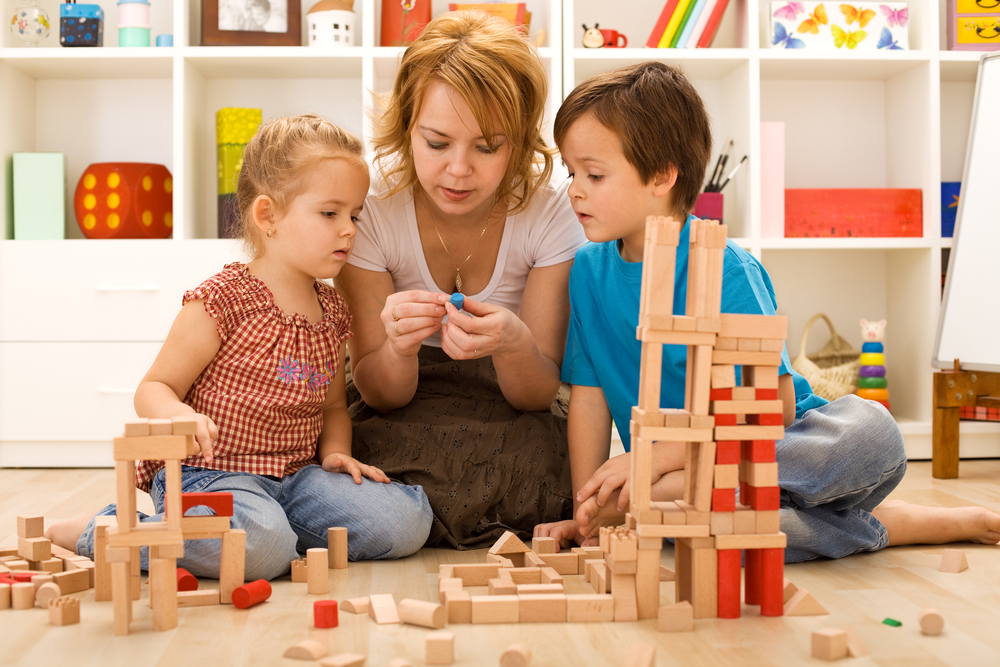
What is learning through play? We are hearing about this more and more each and every day. Learning through play is a term that is used by educators and professionals alike. This is used to describe how a child can make sense of the world around them. Through play professionals are able to allow children to learn at their own pace and touch upon all the developmental domains they were taught during their education.
How can parents incorporate effective learning through play materials for children at home.
It is as simple as making playdough at home (allows children to measure (math) add ingredients and see what happens as we add more ingredients (science, cooking)
INTERACTING DURING PLAY/OPEN ENDED QUESTIONS
Interacting with your children and joining in on play is important. It allows you to ask questions and build a strong relationship with your children. Asking open ended questions allow your children to continue to think during play. Some great open ended questions can be;
- Describe what is happening?
- Can you think of a new way to do it?
- Do you have any other ideas?
- How are the alike, different?
- How did you get that to work?
These allow their little brains to keep thinking during play.
SENSORY
Sensory play can be messy but very important! There are many ways to incorporate some great sensory activities with little to no mess. Such as;
- Playdough
- Painting/ coloring
- Ziploc bags
- Sensory water bottles
As a parents a also include messy sensory during the summer months so they can be enjoyed outdoors! The most popular and enjoyable outdoor activity is water play! Simple as food coloring and adding items into the water table.
OTHER PLAY-BASED LEARNING ACTIVITIES
Simple ideas for a child learning through play include:
- Playing with blocks. When your child builds a tower, take some away, then add some more. This helps create an understanding of numbers.
- Fill a basket with different objects: pinecones, leaves, wooden spoons, furry fabric, or pieces of dried pasta. As your child picks one up, ask them how it feels. Describing these items will help your child develop language.
- When your child is in the bath (supervised!), give them plastic cups and bowls, and encourage them to pour water from one to the other. You can also do this outside with sand or rice! This builds their hand-eye coordination and ability to concentrate.
- Ask them to tell you a story starring their favorite doll or plushy. Is Teddy a spaceman, a nurse, or a truck driver? The possibilities are endless. This fosters imagination and creativity.
6 TIPS FOR PLAY-BASED LEARNING AT HOME
1. Have Fun and Be Creative
Choose brightly colored toys that have many functions and potential for different kinds of play. Set up a simple art area at home which could be as basic as crayons and paper, or easels, paints, and plastic aprons! Make a small and colorful book corner in your living room or child’s bedroom or set up a magnetic board in the kitchen with animals and letters. You are not setting up “school” but making a fun place for your child in which to discover, create, and explore.
2. Turn Off All Distractions
When engaging in play with your child, you would like them to focus and so should you! Is the television on? Turn it off! Is your phone near you, pinging with notifications? Move it to another room! If your child is not distracted by moving images, lights, or sounds, you should experience a more rewarding playtime that is concentrated and really captures the attention of both adults and children.
3. Be Creative with Reading
Your children are never too young to be read aloud to. You can employ silly voices as you read or dress up as your favorite character while you turn the pages. Fostering an early love of reading can aid your child’s cognitive and language spells and result in great bonding time as a family over shared beloved books. Reading a child’s favorite book can springboard to other activities like baking or craft activities related to the story or the characters. Use your imagination and your child’s will be nurtured, too.
4. Always Encourage
Give your child a confidence boost during play by rewarding them with language that tells the child what they did was good. For example, “Look at you! You turned off the light!” A hug or a high five when they achieve even the very smallest thing in a play task, like placing a shape in the correct hole or identifying a picture of an animal, is wonderful encouragement. Keep up the fun energy and positivity!
5. Don’t Over-Schedule
Scheduling too many activities in the day or being too inflexible in a timetable can be counterproductive. Children need large amounts of time to have the freedom to play on their own and see where their imagination takes them. Make sure there is enough “down time” where your child is not tied to a time limit or too rigid a structure.
6. Allow for a Little Failure
Don’t try to micro-manage your child’s play too carefully and allow them to make mistakes so they can learn from them. It’s how adults do things, after all! Follow their lead, and let them fail, then, when they are successful in another small task, boost them with a little praise.
All these ideas are great and a simple way for parents to incorporate learning through play, remember to have fun these will be lasting memories!