

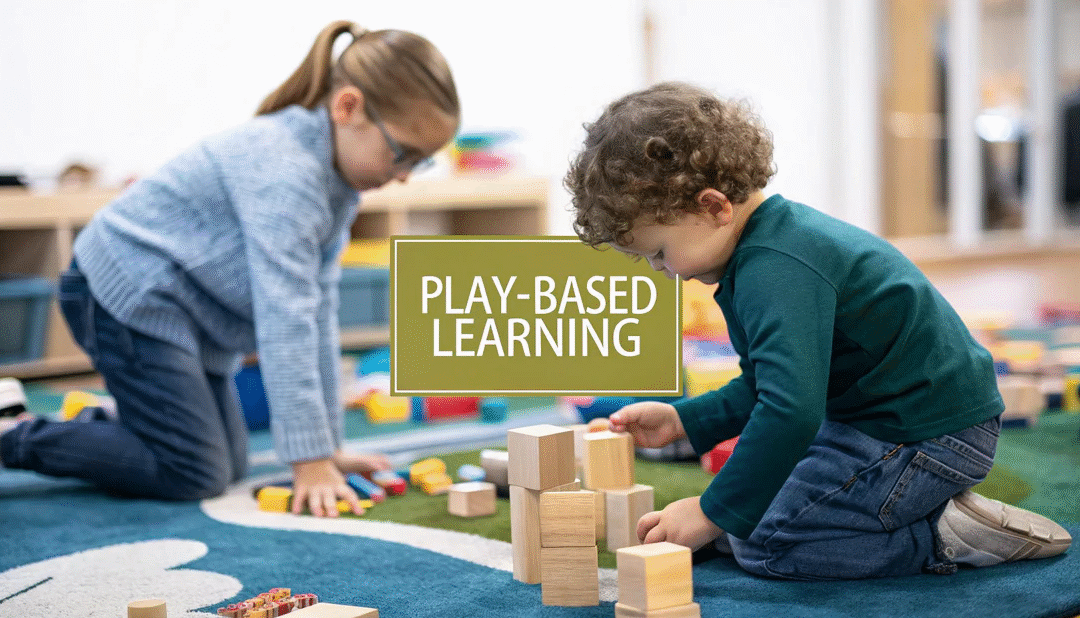
The Benefits of Play-Based Learning
In the bustling world of early childhood education, one approach stands out for its ability to engage, nurture, and educate young minds – play-based learning. At Rising Stride we firmly believe in the power of play-based learning, recognizing its countless advantages in shaping the future of our little preschoolers. In this blog, we will explore the benefits of play-based learning, shedding light on why it’s not just a whimsical method but an essential one for children’s holistic development.
What is Play-Based Learning?
Play-based learning is an educational approach that utilizes play as a fundamental tool for children’s development and learning. This method recognizes that children naturally explore, experiment, and engage with their environment through play, making it an effective and enjoyable way to acquire essential skills, knowledge, and social competencies. Play-based learning can occur in various settings, such as nurseries and at home.
In play-based learning, children are encouraged to engage in unstructured or semi-structured activities that are enjoyable and intriguing. They develop a wide range of cognitive, social, emotional, and physical skills through these activities. Play-based learning provides a holistic approach to education, recognizing that these domains are deeply interconnected.
Play-based learning is a valuable educational approach that recognizes the natural inclination of children to learn through play. It provides a comprehensive foundation for children’s development, ensuring they acquire crucial skills while enjoying their educational journey. This approach underscores the importance of engaging, child-centered education in the early years to build a strong and well-rounded foundation for a child’s future learning and development.
What are the Benefits of Play-Based Learning?
Fostering Creativity and Imagination
Play-based learning sets the stage for children to embark on imaginative adventures. Whether they’re building castles with building blocks, creating artwork with colorful paints, or engaging in pretend play, these activities stimulate their creativity. When children are encouraged to explore and experiment, they develop the ability to think outside the box, problem-solve, and dream big. These skills are the building blocks of innovation and imagination, preparing children for a future where creative thinking is highly valued.
Enhancing Social Skills
Rising Stride prides itself on the nurturing social environment that play-based learning creates. Children interact through play and learn vital social skills like cooperation, sharing, and communication. They also develop empathy and respect for others, laying the foundation for successful relationships in the future. Through group activities, they understand the importance of teamwork and the joy of collaboration, setting them on a path to becoming well-rounded individuals.
Cognitive Development
The cognitive development of young children is intricately connected to play-based learning. Children engage in problem-solving, critical thinking, and decision-making activities in a play-based setting. They develop essential cognitive skills by exploring puzzles, sorting objects, and playing educational games. These skills are not only beneficial for their academic journey but also for lifelong learning.
A group of researchers from The Institute of Education Science conducted an extensive review of decades of research centered around “guided play,” a term often used interchangeably with play-based learning. The findings of this analysis assert that play-based learning exhibits a notably heightened positive impact on the development of skills such as mathematics proficiency, spatial awareness, and task-switching abilities compared to conventional educational methods that place a greater emphasis on prolonged periods of seated instruction and explicit guidance.
Emotional Regulation
Play-based learning is a safe and nurturing space for children to explore and understand their emotions. Through pretend play, storytelling, and artistic activities, children learn to express their feelings and manage them effectively. This early emotional intelligence sets them on a path to emotional regulation and healthy relationships, which are critical life skills.
Language and Communication Skills
At Rising Stride, we believe that language and communication skills are best developed through interaction and play. Play-based learning offers numerous opportunities for children to engage in conversation, storytelling, and listening. These activities help build a strong foundation for language development. Through games, children expand their vocabulary, learn the art of storytelling, and practice active listening, which are invaluable skills for academic and personal growth.