
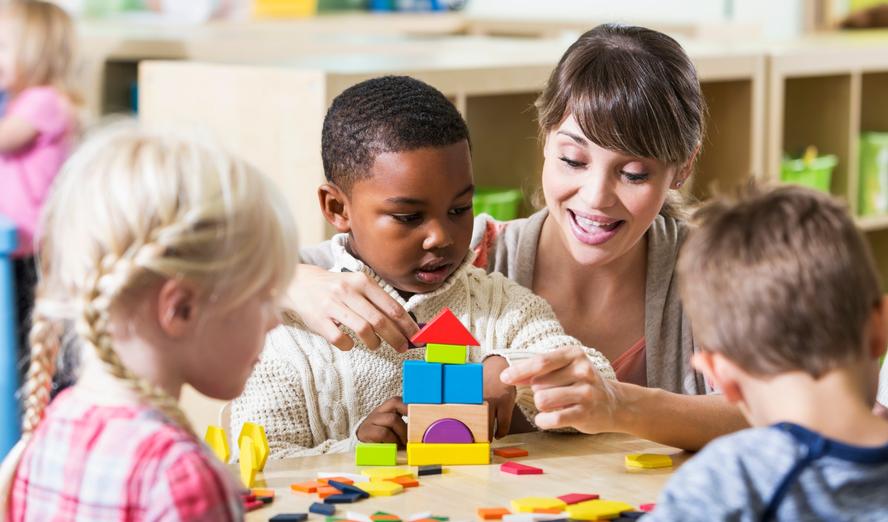
Discover simple ways to nurture STEM learning in the early years and help your child grow into a confident problem-solver.
At Rising Stride, we recognize that the early years are a vital time for building the foundations of lifelong learning. In today’s fast-changing world, skills such as critical thinking, problem-solving, creativity, and adaptability are more important than ever, and many of these are nurtured through STEM learning.
STEM stands for Science, Technology, Engineering, and Mathematics. While often associated with secondary education, the early years are actually one of the best times to introduce STEM in fun, playful, and age-appropriate ways. In fact, young children are natural scientists and engineers – asking questions, exploring materials, and solving problems through hands-on discovery.
In this blog, we explore what STEM looks like in the early years, its benefits, how we support it at Rising Stride, and practical ways you can encourage it at home.
What is STEM Learning in the Early Years?
STEM learning in the early years is an integrated, holistic approach that encourages children to explore the world through inquiry, experimentation, and creative thinking. It’s not about formal instruction or memorizing facts – instead, it happens naturally through activities such as building with blocks, pouring water between containers, asking “why” and “how,” and exploring materials through open-ended play.
At Rising Stride, we view children as capable, curious learners. Whether they’re investigating why some objects sink and others float, experimenting with shadows, or constructing a bridge from wooden planks, they are developing STEM skills without even realizing it. Every question, test, and discovery is an important step in their learning journey.
The Benefits of STEM Learning in the Early Years
As the world becomes increasingly shaped by science and technology, building a strong foundation in STEM helps children better understand their surroundings and equips them with the tools to navigate an ever-changing future.
Research shows that the period from birth to age eight is the most critical for human development. During this time, children’s brains are highly receptive to new experiences. Introducing STEM concepts early supports:
1. Cognitive Development
STEM encourages logical thinking, memory, and decision-making. Through trial and error, children learn to solve problems, analyze outcomes, and approach challenges with flexible thinking and resilience.
2. Language Development
STEM-rich play promotes the use of descriptive language and communication skills. As children explain what they’re doing, ask questions, and describe observations, their vocabulary and confidence in speaking grow.
3. Social and Emotional Learning
Group-based STEM tasks, such as building structures, experimenting with materials, or exploring nature, foster collaboration, empathy, and patience. Children learn to listen to others, take turns, share ideas, and work towards common goals.
4. Confidence and Independence
Exploring and experimenting teach children that mistakes are a valuable part of learning. They develop a growth mindset and gain confidence in their ability to figure things out on their own.
5. School Readiness
Introducing concepts like counting, measuring, comparing, and observing in a play-based context lays the groundwork for future success in math’s, science, and literacy. Children become comfortable with early academic language and routines while still learning through play.
How We Explore STEM at Rising Stride
At Rising Stride, STEM is woven throughout our everyday routines, environment, and play-based curriculum. We focus on real-life, hands-on experiences that stimulate curiosity and develop critical skills.
Here’s how we explore each element of STEM:
- Science: Investigating weather, plant life, animals, materials, and cause and effect.
- Technology: Using torches, magnifying glasses, simple digital tools, and other child-safe technology to support discovery.
- Engineering: Building towers, bridges, and obstacle courses using blocks, natural materials, and recycled items.
- Mathematics: Exploring counting, measuring, comparing, sorting, and pattern-making through meaningful play.
We make use of natural materials, open-ended resources, and the outdoors to create inviting environments where children feel free to explore, question, and experiment.